


Gifting has never been easier
Perfect if you're short on time or are unable to deliver your gift yourself. Enter your message and select when to send it.


Most of the time, yes. A newborn sleeping with their mouth open is often just a relaxed jaw, a sleepy, milk-drunk baby or a stuffy nose. Young babies much prefer breathing through their nose, so if your baby breathes through their mouth most nights, snores loudly, or seems to pause or struggle when breathing, it's worth speaking to your GP.
Newborns are natural nose breathers. As The Lullaby Trust explains, young babies often breathe through their noses, which is one reason it's so important to keep their whole face clear when they sleep.
So why the open mouth? Often it's simple relaxation. Once your baby drifts off, their jaw muscles soften and their mouth can fall open, especially after a big feed. Plenty of babies nod off mid-feed and stay in latch position long after the milk has stopped. Others are just a bit snuffly. Newborn nasal passages are tiny, so even a little mucus can make nose breathing harder work.
The odd open-mouthed snooze is nothing to worry about. It's when mouth breathing happens most nights, alongside other signs, that it's worth a closer look.
Newborns can breathe through their mouths when they need to, like when they're crying or their nose is blocked, but given the choice they'll use their nose. Between about 4 and 6 months, as their airway grows and changes, babies start to breathe through their mouths more easily too. By around 12 months, their breathing pattern is much closer to yours.
Most of the time, a baby sleeping with their mouth open has a simple, harmless explanation. Common causes include:
Even when there's a reason behind it, mouth breathing on its own usually isn't harmful. It's still worth keeping an eye on, especially if it hangs around after a cold has cleared.
You know your baby best, so trust your instincts. Speak to your GP or health visitor if your baby:
According to the NHS, loud snoring with pauses in breathing, restless sleep and mouth breathing can be signs of obstructive sleep apnoea (OSA), where the upper airway narrows or becomes blocked during sleep. Most children who snore don't have OSA, and it's treatable. A short video of your baby sleeping can really help your GP, who can refer you to a specialist if needed.
Call 999 or go to A&E if your baby is having difficulty breathing or is breathing very fast, has blue, grey or pale lips or skin, or is difficult to wake. If your baby is under 3 months old with a temperature of 38°C or higher, get medical help urgently. The NHS has the full list of signs to look out for.
A few small habits can help your baby breathe easy, day and night:
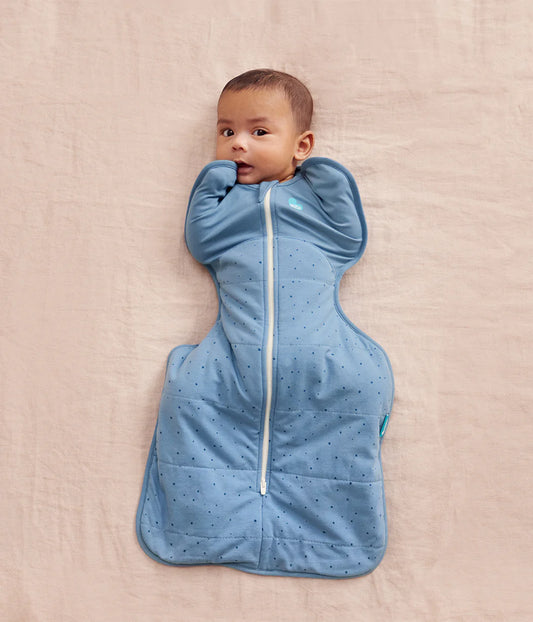
Sleepwear won't clear a stuffy nose, but it can help your baby stay comfortable while their body does its thing. Our Swaddle Up™ keeps their head and face clear, comes in a range of TOGs for every season, and lets them sleep in the arms-up position babies naturally love. Choose a TOG that suits your room, and you're set. It's how we've been helping little ones Love to Dream since 2008.




Usually not. An open mouth during sleep is often just a relaxed jaw or a stuffy nose. If your baby breathes through their mouth most nights, snores loudly, or seems to pause or struggle when breathing, speak to your GP.
Gently wipe away mucus, try saline nose drops (your pharmacist can recommend one for your baby's age) and give feeds a little extra time. Keep sleeping them on their back on a firm, flat surface. If their nose is often blocked even without a cold, or it's getting in the way of feeding or sleep, see your GP, as allergies or enlarged adenoids can be behind it.
Occasional mouth breathing won't. When it's linked to ongoing sleep problems like obstructive sleep apnoea, broken sleep can affect a child's mood, behaviour, concentration and learning. That's why persistent mouth breathing is worth getting checked. The good news: the causes are usually treatable.
Light, snuffly snoring is common, especially when your baby has a cold. Loud or regular snoring, particularly with mouth breathing, gasping or pauses in breathing, is worth a chat with your GP.
No need. Gently closing their mouth won't change how they breathe, and you should never use anything that covers their mouth or face. Simply lay your baby on their back on a firm, flat surface with their head and face uncovered. If the mouth breathing continues, ask your GP.
A newborn sleeping with their mouth open is usually just a relaxed, sleepy baby or a stuffy nose. Keep their nose clear, always sleep them on their back on a firm, flat surface, and dress them comfortably for the room. If mouth breathing happens most nights, or comes with loud snoring, pauses in breathing or tricky feeds, speak to your GP. You know your baby best.
Looking for more sleep support? Explore our baby sleep blog for expert tips from newborn days to big kid beds.