


Gifting has never been easier
Perfect if you're short on time or are unable to deliver your gift yourself. Enter your message and select when to send it.


No. Swaddling is a settling technique, not a safer sleep requirement, and plenty of babies sleep well without it. That said, many newborns do settle better when they're snugly wrapped, so it's worth knowing what a swaddle does before you decide.
Your baby has just spent nine months curled up somewhere warm, snug and dark. The first few months outside the womb, often called the fourth trimester, are a big adjustment, and a snug swaddle can feel reassuringly familiar.
Then there's the startle (Moro) reflex: that sudden, arms-flung-wide jolt that can wake a newborn just as they drift off. A swaddle keeps those arms from flailing, so many babies wake less and settle for longer. Our guide to the Moro reflex and swaddling goes deeper.
For some babies, wrapping also makes it easier to settle on their back, the recommended position for every sleep.
One honest note: swaddling isn't a way to lower the risk of SIDS on its own. Back sleeping and a clear, flat sleep space are what matter most, wrapped or not.
A swaddle might be worth a try if your baby:
If none of these sound like your baby, there's no reason to start. Unswaddled and happy is a lovely place to be.
Some rules aren't up for debate. Don't swaddle your baby:
These line up with The Lullaby Trust's swaddling guidance, which is worth a read if you're swaddling.
If you do swaddle, how you do it matters more than whether you do it at all. The five essentials:
For the full step-by-step, see our guide on how to swaddle a baby.
A wrap that holds the legs straight and together can affect normal hip development. Keep it firm across the chest but loose at the hips, so your baby's knees can bend up and fall apart naturally. Think little frog legs.
A swaddle is a layer in itself, so go light underneath, and never add extra bedding over a swaddled baby. In warmer weather, a nappy and short-sleeved vest is usually plenty. When it's cooler, try a lightweight sleepsuit. Choose a lower TOG for swaddle products, and use the TOG rating to match what your baby wears to the room temperature. Our TOG guide makes this easy.
A traditional wrap that works loose can end up near your baby's face, which is the strongest case for a fitted swaddle that can't unravel. Aim for firm, not tight: it should stay put, while your baby's chest can still rise and fall freely.
No. A clear Moses basket or cot with a firm, flat mattress, and your baby on their back, is what matters, swaddle or no swaddle.
It's a fair question, though. The transfer from your arms to the Moses basket is when the startle reflex tends to cause the most trouble. If that's your sticking point, a correctly sized sleeping bag or an arms-up sleep garment can give that snug feeling without a traditional wrap.
Skipping the swaddle doesn't mean going it alone. A few options that help:
If your baby resists a wrap, the Swaddle Up™ lets them sleep in a natural arms-up position with their hands near their face, the way many babies settle instinctively, in a fitted design with no loose fabric. When it's time to move on, the Swaddle Up™ 2-in-1 Transition Bag and our sleeping bags are the next steps. Helping little ones Love to Dream since 2008.


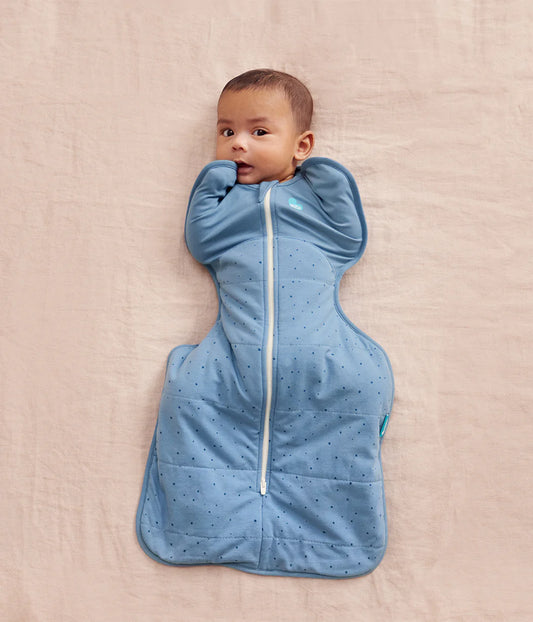


There's no single magic age, and published advice varies. Here's what matters most:
Our guide on when to stop swaddling your baby covers the signs to watch for, and from swaddling to arms-free sleep walks you through the switch.
Yes. Swaddling is optional. What keeps sleep safer is the same whether your baby is wrapped or not: on their back for every sleep, in a clear cot or Moses basket with a firm, flat mattress, and with their face and head uncovered. Plenty of babies sleep well without ever being swaddled.
Absolutely. A clear Moses basket with a firm, flat, well-fitting mattress is a safer sleep space either way. If your baby startles awake on the transfer, a correctly sized sleeping bag can give a snug feel without a wrap. Just keep pillows, bumpers and soft toys out of the Moses basket.
No. Swaddling isn't a safety requirement, so skipping a night won't do any harm. Consistency can help, though, because babies often settle more easily with a familiar routine. If swaddling works for your baby, using it for every sleep can become a helpful cue that it's time to rest.
Try a fitted, TOG-rated sleeping bag, an arms-up sleep garment, gentle white noise, room sharing and a calm, predictable wind-down routine. Taking the chill off the cot sheet with your hands before you lay your baby down can help with the transfer too. Mix and match until you find what works.
Yes, babies can sleep unswaddled from birth. You might notice a few more startle wakes in the early weeks, because the Moro reflex is strong at this age, but it isn't a safety concern. Keep them on their back in a clear, flat sleep space and dress them for the room temperature.
There are three to know about: hip development, if the legs are wrapped straight and tight; overheating, if the fabric is too heavy or your baby is overdressed; and loose fabric near the face, if a wrap unravels. All three are avoidable with lightweight fabric, room at the hips and a fitted swaddle.
You don't have to swaddle your newborn. If it helps your baby settle, it's a reasonable tool to use, and if it doesn't, there are plenty of other ways to help them sleep. Whatever you choose, two rules don't change: back to sleep, every sleep, and stop swaddling at the first signs of rolling.
If sleep still isn't coming easily, you're not doing anything wrong. Newborn sleep is just hard sometimes. Your health visitor or GP is a great next step, and The Lullaby Trust has plenty more safer sleep advice.
Looking for more newborn sleep tips? Explore the Love to Dream™ baby sleep blog.